About this book
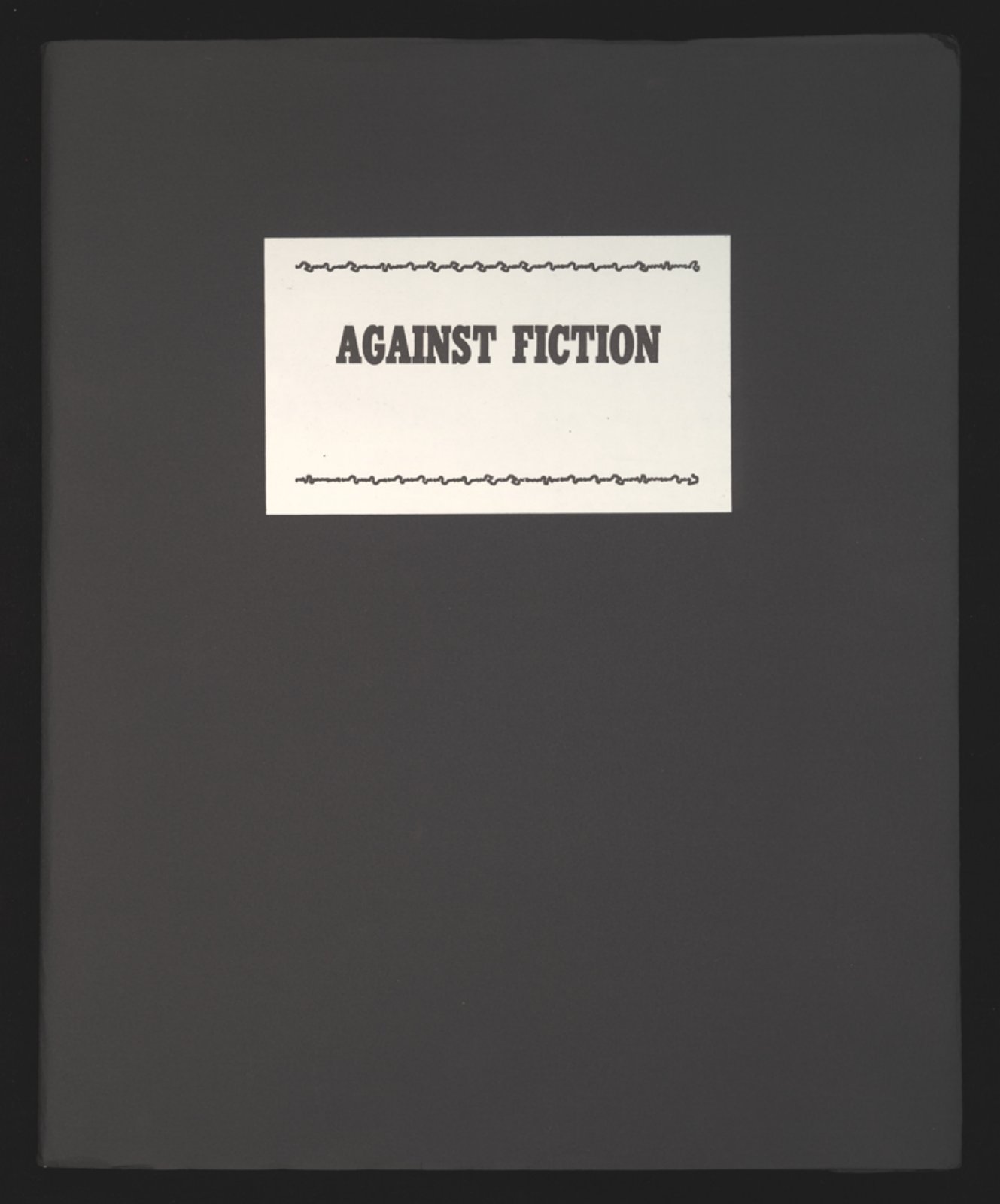
Johanna Drucker is the author, artist and printer of Against Fiction, published by Druckwerk. Written over six years, its text brings a confrontation with literary traditions into dialogue with women and narrative, news and mediation, and language and material. The title’s “Against” signals both dependence on and rejection of fictional tradition. The accompanying account identifies the subtitle Organized Affinities as an adaptation of Goethe’s Elective Affinities.
Drawing on tabloids and Peter Eisenman’s House X, Drucker developed a mathematical structure of repetition and variation: sections containing one to four paragraphs per page increase in length, while type sizes and arrangements follow prescribed changes. Each page also permits one random variation. The design invites browsing through headlines, snippets and blocks rather than requiring linear reading. Drucker continued editing while setting type by hand, incorporating feminist theory, psychoanalysis and the idea of a polymorphous voice.
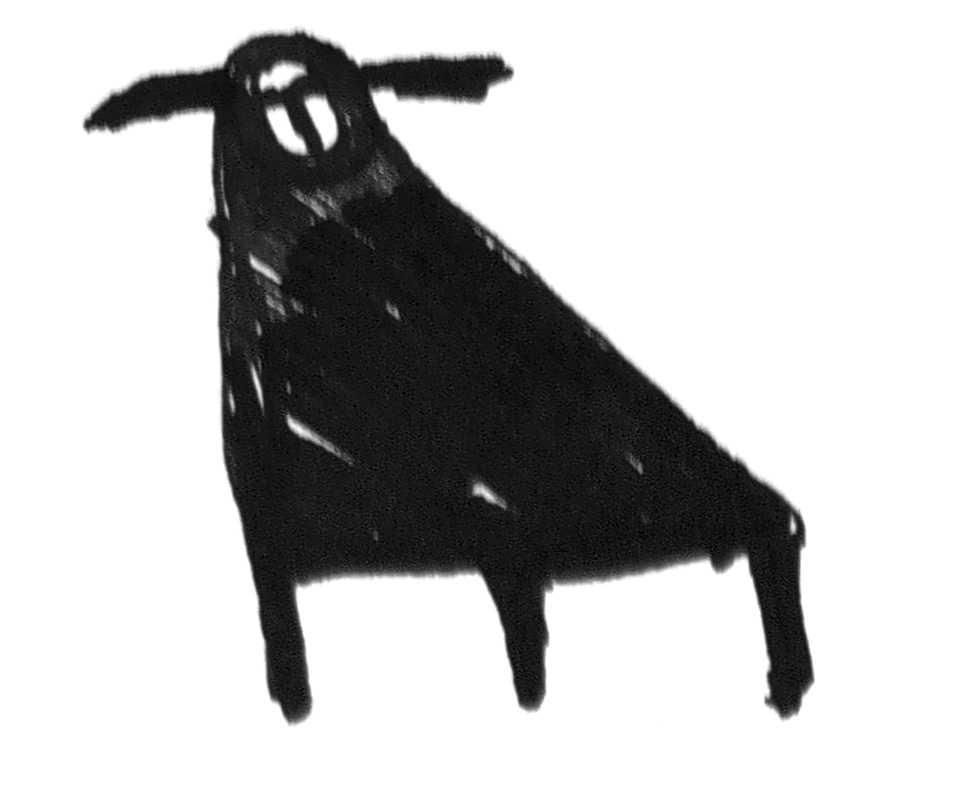
The book was handset in Stymie and printed on a Vandercook proof press in Oakland, California, with linocuts based on newspaper and snapshot images and a hand-sewn binding. The record lists 48 unpaginated pages and an edition of 97. It gives 1983 as the publication year, whereas Drucker’s retrospective account says printing was finished in 1984. The publication year therefore remains unresolved.
Source and images: Johanna Drucker. Digitisation: University of Virginia (2004–2008). PDF assembly: od3pt. Earlier digital recovery: Danny Snelson. CC BY, version unspecified.
Project statement
Against Fiction developed over six years from notes and texts accumulated in Greece, Amsterdam and the Bay Area. It addresses Drucker’s conflict between inherited fictional traditions and the literary and artistic modes of production she subsequently encountered. The title’s “Against” signals both dependence on and rejection of that tradition.
Production history
After rejecting an initial tabloid-like design as too parodic, Drucker drew on Peter Eisenman’s House X to develop a mathematical design using repetition, variation and one random element per page. She edited and condensed the text while composing in the stick. Critical theory, particularly language and psychoanalysis in relation to feminism, shifted its focus towards the polymorphous voice as a feminist mode. Linocuts were made with a ruler as a guide, seeking a mechanistic rather than expressionist appearance. Drucker recalls about 400 hours of production. Her account dates completion of printing to 1984, conflicting with the 1983 production records.
Archives and sources
Numerous text manuscripts and mockups are held in the artist’s archive; this is not a stated location for the digitised copy.