About this book
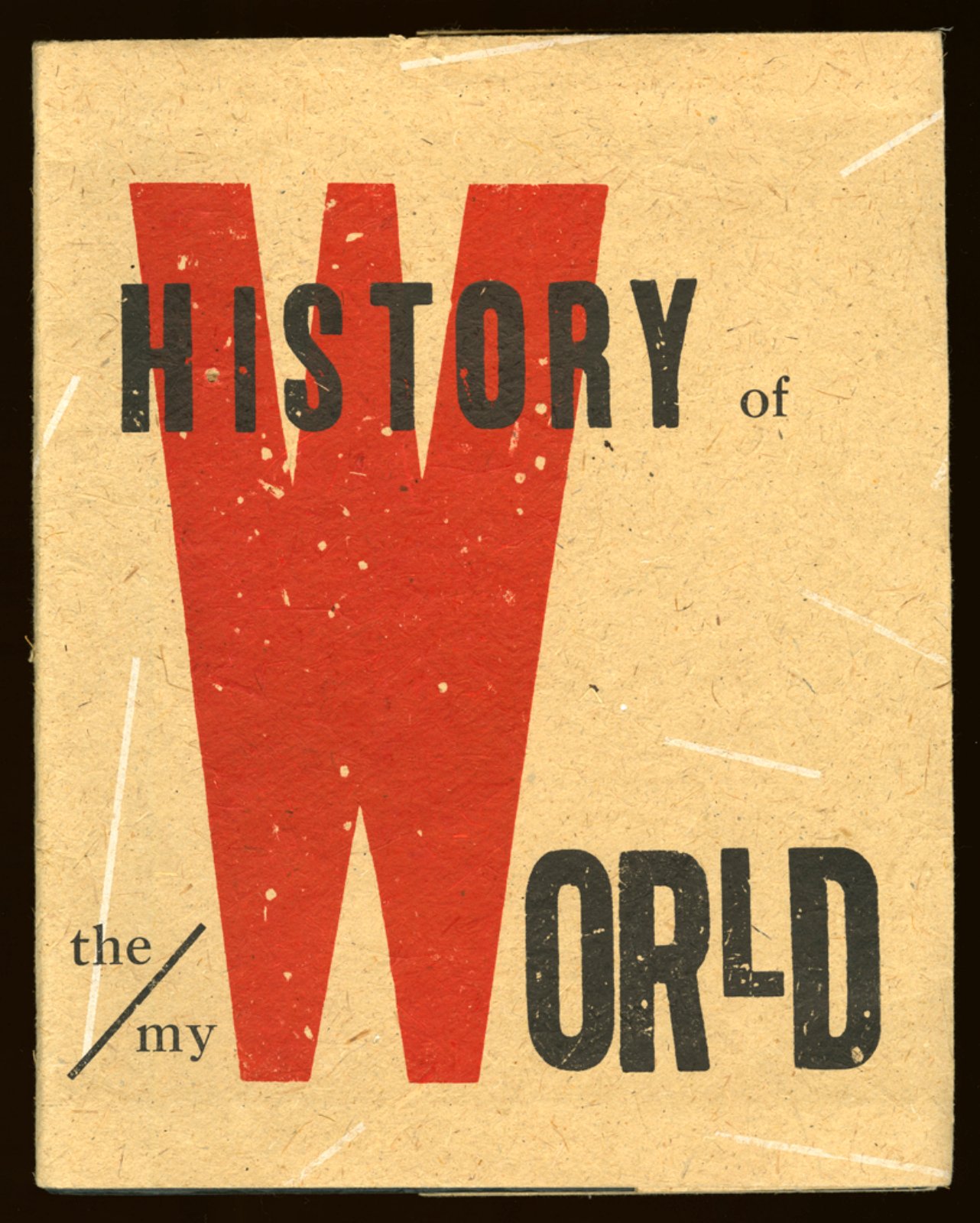
Johanna Drucker’s History of the/my Wor(l)d interweaves a feminist rewriting of world history with personal memories of her mother. The title’s Word/World and the/my oppositions introduce tensions between language and knowledge, history and memory. Drucker questions accounts of language as exclusively patriarchal through her own intimate, maternal relationship to language and literature. Large black type carries the reworked world history, while smaller red type brings personal memory into it.
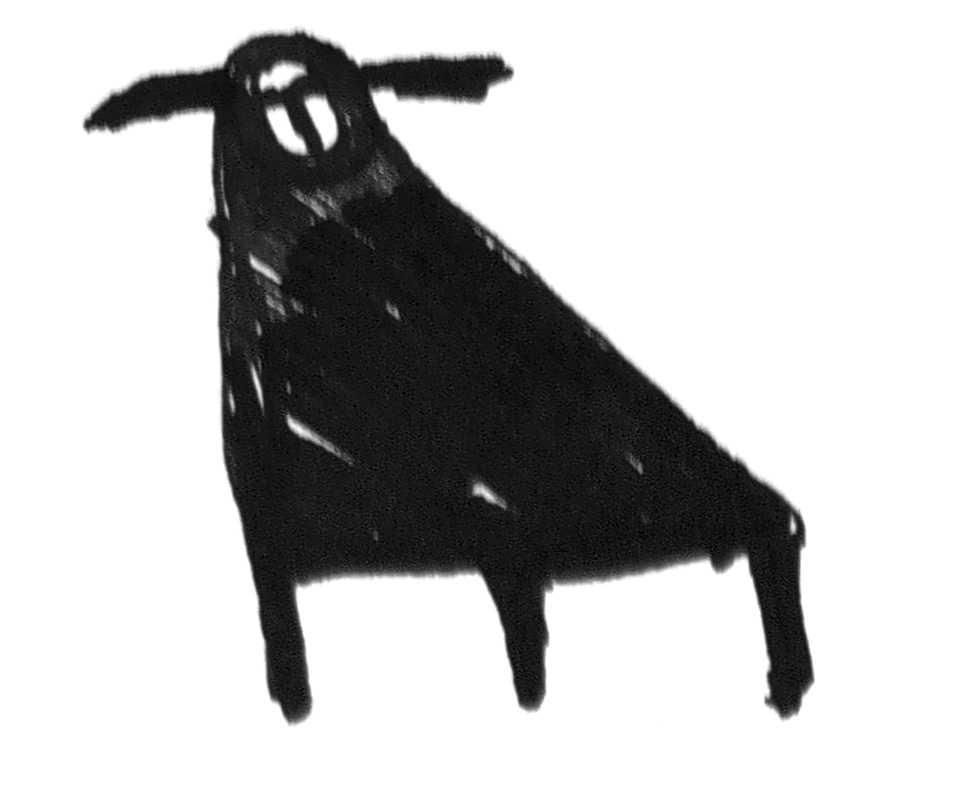
The project began in 1989 with a printing cut of a drum majorette that recalled her mother’s youth. An initial plan to arrange images randomly gave way to deliberate arrangements of found cuts, graphic games and visual puns. History, memory and captions were composed separately. Each sheet required five printing runs. Drucker identifies Tom Phillips’s work with sequence as a constraint as an inspiration.
The first edition documented here was published by Druckwerk in June 1990 in 70 copies. It was letterpress printed in black and red, hand sewn and enclosed in printed bagasse wrappers. Drucker is credited as author, printer and designer. She acknowledges Gino Lee’s support at the Bow and Arrow Press; the colophon also thanks Charles Steele. A second edition was published by Granary in September 1995.
Source and images: Johanna Drucker. Digitisation: University of Virginia (2004–2008). PDF assembly: od3pt. Earlier digital recovery: Danny Snelson. CC BY, version unspecified.
Project statement
The book combines a feminist rewriting of world history, a tension between official history and personal memory, and graphic and textual play. A tribute to Drucker’s mother, it opens with a drum majorette recalling her mother’s teenage baton twirling in Downer’s Grove, Illinois. Drucker’s intimate, erotic experience of language and literature through her mother challenged a blanket feminist account of language as patriarchal. Red personal memories interrupt the black historical narrative, giving memory a presence within the retelling.
Production history
The project began in 1989 with a drum-majorette cut encountered at Bow and Arrow. Drucker abandoned an initial plan for randomly sequenced images, arranging them instead into graphic games and visual puns. The large black world history and smaller red personal memories were composed separately; layout and printing had begun before she completed the captions in New York, drawing on childhood and personal experience. Each sheet required five printing runs: large black type, red type, small black type, red images and black images. Printing the covers damaged the wood type, especially the large W, because of the hard bagasse fibres.
Archives and sources
The artist’s archive holds mockups and texts in various forms; the source states that all production materials survive.